
Benign Prostatic Hyperplasia (BPH) is a condition where the prostate gland enlarges with age, compressing the urethra and causing frequent urination, incomplete emptying, straining, or waking up at night to urinate. It is commonly found in men aged 50 and older. Treatment options include medication, lifestyle changes, or surgery in severe cases. It is important to consult a specialist to differentiate it from prostate cancer and to plan appropriate treatment.
What is benign prostatic hyperplasia?
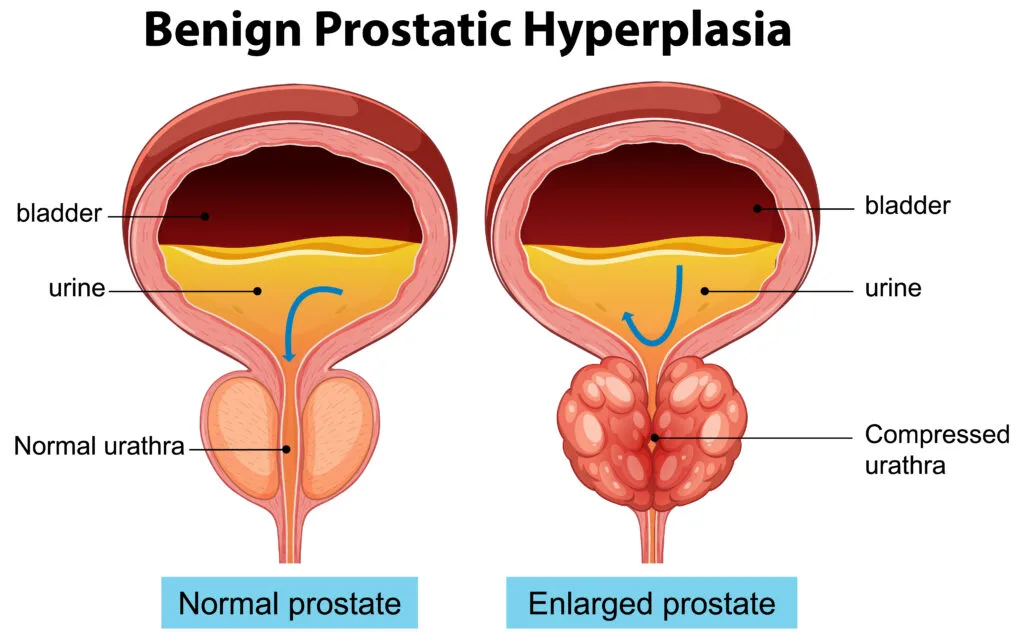
Benign Prostatic Hyperplasia (BPH) is a condition in which the prostate gland enlarges with age. The prostate gland is an important organ in males located beneath.Urinary bladderAs the prostate gland enlarges, it compresses the urethra, causing urinary flow to become obstructed or slowed down.
This condition is not cancer, but it is one of the common health issues found in men over the age of 50. If left untreated, it may lead to complications such as urinary tract infections or ultimately urinary retention.
Causes of enlarged prostate.
Benign prostatic hyperplasia occurs due to changes in the body related to aging, particularly the decrease in testosterone levels, which causes the cells in the prostate to grow more than normal. Additionally, there are other related factors, such as
-
Aging: A primary factor that causes hormonal changes in the body.
-
Genetics: If there is a family history of this condition, the likelihood of occurrence in the next generation will be higher.
-
Chronic conditions: such as diabetes, high blood pressure, orHeart disease
-
Lifestyle behaviors: such as alcohol consumption, smoking, or eating.High-fat foods
-
Lack of exercise: It impairs the functioning of the circulatory system and waste elimination.
Symptoms of benign prostatic hyperplasia (BPH)
Symptoms of benign prostatic hyperplasia often begin with urinary abnormalities and will gradually worsen if left untreated, such as
-
Frequent urination, especially at night.
-
Incomplete urination, feeling a constant urge to urinate.
-
Difficulty urinating or dribbling.
-
Intermittent or interrupted urination.
-
It requires a lot of straining during urination.
-
Urinary incontinence when unable to hold it.
-
Urine may have a strong odor or contain blood in some cases.
These symptoms often develop gradually, are not severe in the early stages, but can impact the quality of life, such as not getting enough sleep or having difficulty traveling long distances due to frequent urination.
Is an enlarged prostate dangerous?
Although benign prostatic hyperplasia is not cancer, neglecting treatment may lead to severe complications, such as
-
Acute urinary retention requires catheterization.
-
Urinary tract infection or bladder infection.
-
Urinary bladder stones
-
The bladder is dilated, leading to muscle degeneration.
-
Kidney deterioration due to long-term urinary retention.
Therefore, if you start experiencing abnormal urination symptoms, you should see a specialist for an accurate diagnosis.
Diagnosis of Benign Prostatic Hyperplasia (BPH)
Diagnosis is performed by a specialist in urology, who will use multiple methods to assess the severity and rule out other conditions, such as prostate cancer.
The main steps of the examination include
-
Medical history taking: to observe the pattern of urination and frequency each day.
-
Digital rectal examination: to assess the size and firmness of the prostate gland.
-
Urinalysis: Testing for infection or blood in the urine.
-
Blood test: To check the prostate cancer marker levels.
-
Ultrasound: Check the size of the prostate and the volume of residual urine in the bladder.
Treatment methods for benign prostatic hyperplasia (BPH).
The treatment approach depends on the severity of the symptoms, which can be divided into three main groups:
1. Behavioral modification
Suitable for those with mild symptoms that can still be managed through self-care, such as
-
Reduce water intake before bedtime or before leaving the house.
-
Avoid beverages that contain caffeine and alcohol.
-
Do not hold urine for too long.
-
Exercise regularly to stimulate the circulatory system.
-
Consume a diet rich in fruits and vegetables and low in fat.
2. Medication Use
If the symptoms interfere with daily life, the doctor may prescribe medication to help relax the muscles around the prostate or medications that help reduce the size of the prostate, such as
-
Alpha-blockers: Help improve urination.
-
5-alpha reductase inhibitors: reduce the growth of the prostate gland.
-
Some herbal medicines, such as extracts from the Saw Palmetto plant (should be used under medical supervision).
3. Surgery
If medication is ineffective or there are complications such as urinary retention or kidney deterioration, the doctor may recommend surgery, such as
-
Surgery through the urethra
-
The use of laser for prostate tissue removal.
-
Open abdominal surgery in cases of enlarged prostate.

Self-care for individuals with benign prostatic hyperplasia (BPH)
Individuals diagnosed with benign prostatic hyperplasia should continuously manage their health to slow the growth of the prostate and reduce urinary obstruction symptoms, such as
-
Drink water appropriately, not too much in the evening.
-
Avoid smoking and drinking alcohol.
-
Regular exercise
-
Annual health check-up and follow-up with the doctor.
-
Consult a doctor before using other medications, as some may worsen symptoms.
Enlarged prostate should not be overlooked.
Benign prostatic hyperplasia is a common condition that can be treated if detected early. All men, especially those over 40, should regularly monitor for any abnormalities in the urinary system and undergo regular prostate health check-ups to prevent future complications.
Frequently Asked Questions
Is benign prostatic hyperplasia different from prostate cancer?
Completely different. Benign prostatic hyperplasia is not cancer and does not spread, while prostate cancer arises from abnormal cells that may metastasize.
Can benign prostatic hyperplasia be completely cured?
Symptoms can be managed with medication and behavioral adjustments, but if severe, surgical intervention may be necessary.
At what age should one start screening for prostate health?
It is recommended to get screened starting at age 40 or earlier if there is a family history of this condition.
Frequent urination at night is a sign of an enlarged prostate, isn't it?
It may be one of the signs, but a doctor should examine it for confirmation, as the symptoms are similar to other urinary tract diseases.
Can exercise help reduce symptoms of an enlarged prostate?
It helps improve blood circulation, reduce inflammation, and prevent the enlargement of the prostate in the long term.
MENdical Clinic is a specialized clinic for urology and men's health.
If you start experiencing urinary difficulties or suspect that you have an enlarged prostate condition.
MENdical Clinic is a specialized clinic for urology and men's health.
We are ready to provide diagnostic examinations, treatments, and consultations by specialized physicians.
We have standard ultrasound equipment and PSA testing, along with personalized treatment plans, to help you regain confidence and live comfortably once again.
MENdical Clinic provides comprehensive care for all urinary tract and men's health issues with safe, modern treatments that understand every man.