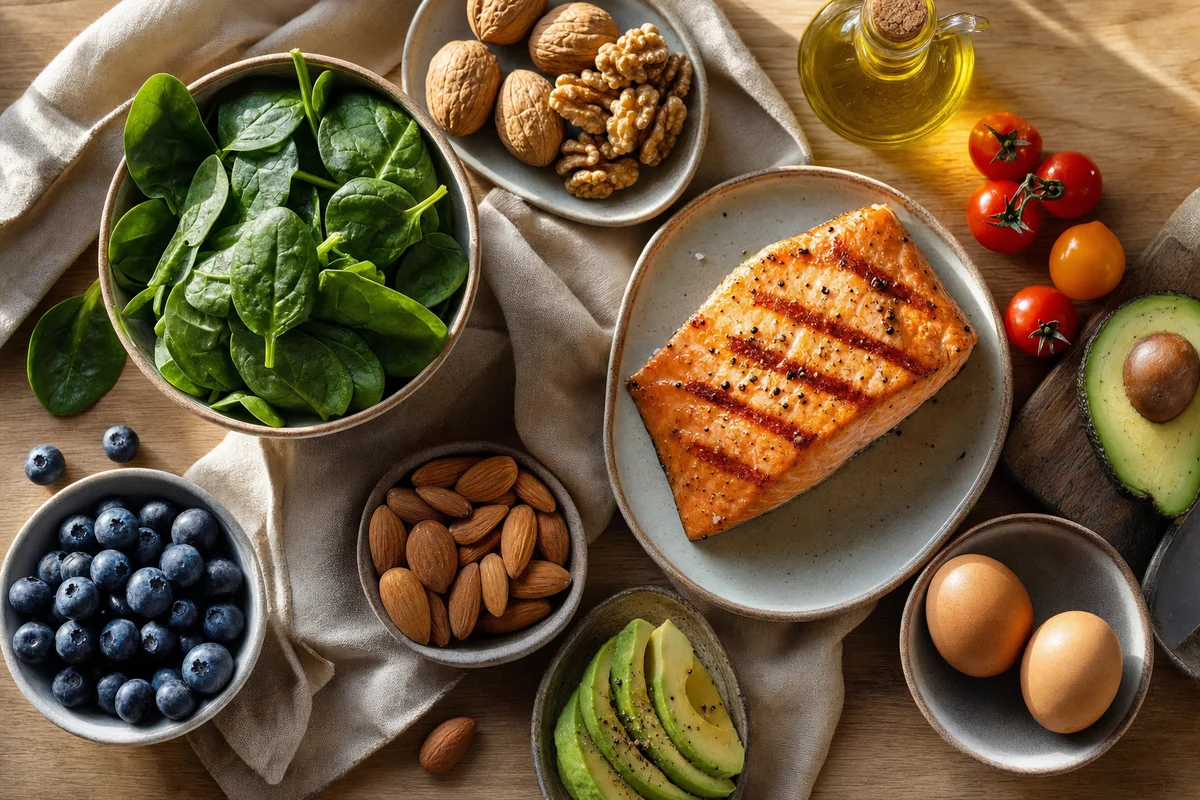
Foods that support healthy blood vessels help erections most: leafy greens and beetroot (nitrates), berries, citrus and dark chocolate (flavonoids), oily fish, nuts, olive oil, and zinc-rich foods such as oysters. A Mediterranean-style diet is linked to lower rates of erectile dysfunction. Food works slowly by protecting blood flow and hormones — it is not a quick fix, and persistent ED needs a doctor's assessment.
Can food really improve erections?
Yes, but indirectly. An erection depends on healthy blood vessels, nerves and hormones. Foods that protect blood vessels — and help keep weight, blood sugar and cholesterol in check — lower the long-term risk of erectile dysfunction (ED). Large studies link a Mediterranean-style diet and flavonoid-rich foods with fewer erection problems.
What food can't do is work like a medicine: no single food produces an erection or cures ED.
8 foods with the best evidence
- Leafy greens and beetroot — rich in nitrates, which the body turns into nitric oxide, the signal that widens penile blood vessels.
- Berries, citrus fruit and red grapes — flavonoids; men who eat more of them have a lower risk of ED in long-term studies.
- Dark chocolate and cocoa (in moderation) — also rich in flavonoids that support blood flow.
- Oily fish such as salmon, mackerel and sardines — omega-3 fats support heart and blood-vessel health.
- Nuts, especially pistachios and walnuts — healthy fats and L-arginine, a building block of nitric oxide.
- Watermelon — contains citrulline, which the body converts to L-arginine.
- Oysters, shellfish, lean meat and pumpkin seeds — zinc, which supports normal testosterone production.
- Extra-virgin olive oil, whole grains and legumes — the backbone of a Mediterranean diet, helping weight, cholesterol and blood sugar.
Foods and habits to cut back on
- Heavy drinking — dulls arousal now and damages nerves, blood vessels and testosterone over time
- Sugary drinks and refined carbs — raise the risk of diabetes, a major cause of ED (see diabetes and ED)
- Processed and fried foods high in saturated and trans fats — linked to clogged arteries
- Smoking and vaping — not food, but one of the strongest causes of vascular ED
- "Male enhancement" supplements — some have been found to contain hidden prescription drugs
Food helps — but it isn't a treatment for ED
A healthy diet works best together with exercise, good sleep and a healthy weight — see exercises to boost sexual performance and how to increase testosterone naturally. It lowers risk and supports recovery, but if erection problems already happen often, the cause should be found and treated.
When to see a doctor
See a doctor if erection problems happen often or last more than about 3 months, or if you also have diabetes, high blood pressure or high cholesterol — ED can be an early sign of heart disease. At MENdical in Bangkok, ED assessment and treatment is led by urologists, with consultations in English. A specialist consultation in English is 1,000 THB.
Frequently Asked Questions (FAQ)
What foods help with erectile dysfunction?
Foods that protect blood vessels: leafy greens and beetroot, berries and citrus fruit, dark chocolate, oily fish, nuts, watermelon, olive oil and whole grains. They lower the risk of ED over time but don't work instantly.
Is there a food that works like an ED pill?
No. Food supports healthy blood flow and hormones over months, but no food produces an erection on demand or cures ED.
Does the Mediterranean diet help erections?
Studies link a Mediterranean-style diet — vegetables, fruit, fish, nuts, olive oil and whole grains — with lower rates of erectile dysfunction and better heart health.
Which drinks are bad for erections?
Regular heavy drinking and sugary drinks. Alcohol dulls arousal and damages blood vessels and hormones over time; sugary drinks raise the risk of diabetes.
Do oysters really boost male performance?
Oysters are very rich in zinc, which supports normal testosterone. They help men who are low in zinc, but they are not an aphrodisiac on their own.