There are three main techniques for circumcision: bloodless (using a device that cuts and seals blood vessels simultaneously, resulting in a smooth wound and quick recovery), sleeve (precise suturing), and knotless (using dissolvable sutures, eliminating the need for suture removal). Each method differs in terms of pain, scarring, and recovery time. It is advisable to have a specialist evaluate the condition of the foreskin to choose the technique that is most suitable for each individual.
Why should men consider circumcision?
Circumcision is the surgical removal of the skin covering the tip of the penis. Doctors often recommend it in cases where there isPhimosisErectile dysfunction, recurrent inflammation/infection, pain during erection, or for improved hygiene.
- Reduce the accumulation of smegma, which is a breeding ground for bacteria.
- Reduce the risk of inflammation of the glans penis (Balanitis)
- Easier cleaning, reduces musty odor.
- Research has found that it helps reduce the risk of certain infections.
What are the different techniques for circumcision?
Currently, there are 3 main techniques for adult circumcision at MENdical Clinic, which differ in...Instruments for wound smoothness and suture knot management.As shown in the comparison image below.
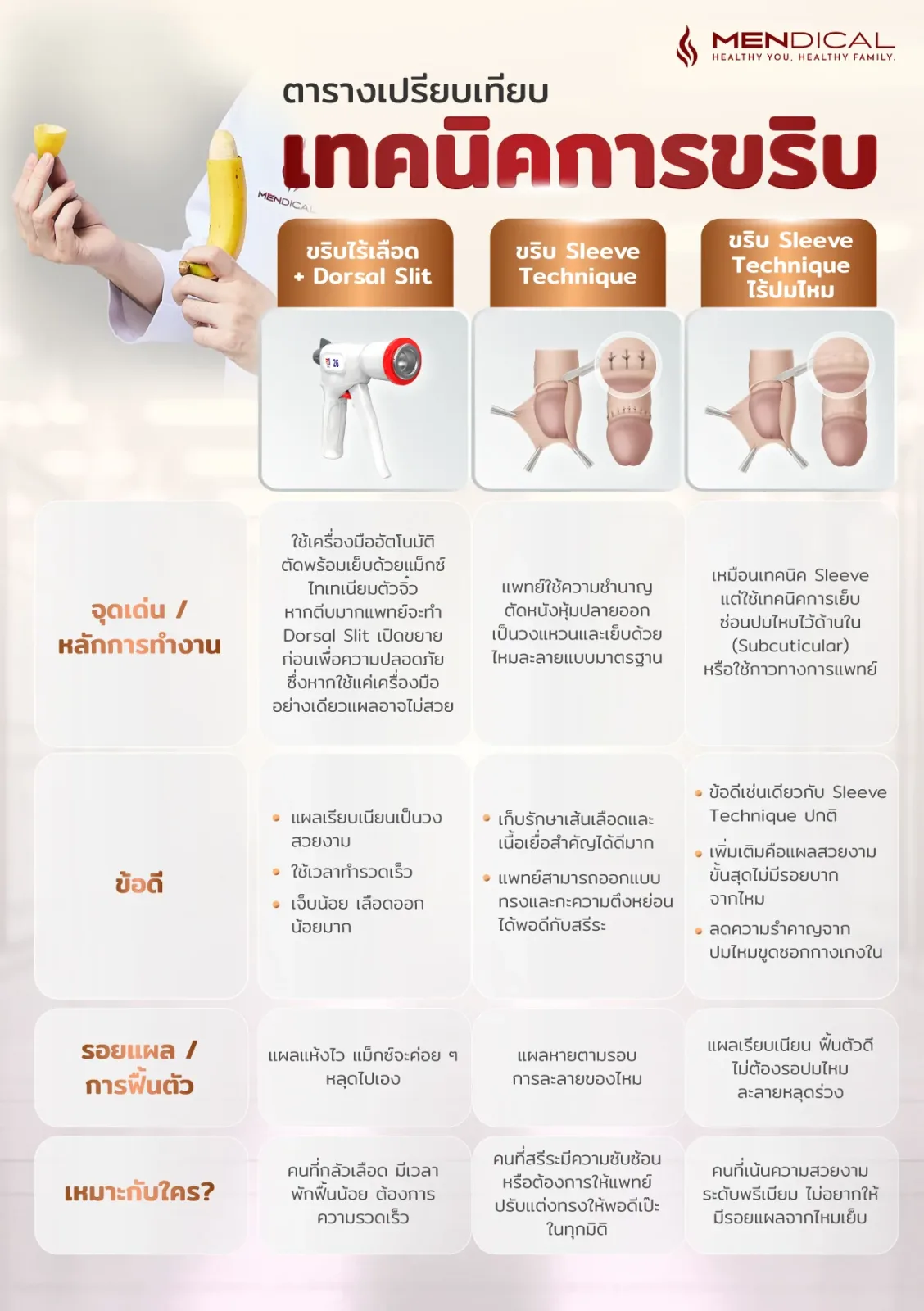
Comparison table of 3 circumcision techniques
| Topic | Bloodless circumcision + Dorsal Slit | Sleeve Technique | Is the sleeve knotless? |
| Principle | Use an automatic cutting tool with hemostasis. | The doctor skillfully excised the tissue and sutured with standard technique. | Similar to a Sleeve but with the knot sewn hidden beneath the skin. |
| Advantages | The wound heals smoothly and beautifully, with a short recovery time and minimal pain/bleeding. | Maintain good blood vessels, with appropriate shape and tension. | Beautiful, smooth scars with reduced visibility of knots, no need for suture removal. |
| Recovery | The wound dries quickly and the stitches come out on their own. | Does it go away after the dissolution cycle? | The wound is smooth, no need to wait for stitches to be removed. |
| Who is it suitable for? | People who are afraid of blood want minimal recovery time. | Those who want to adjust their shape to fit properly. | People focus on premium aesthetics. |
Note: The selection of the appropriate technique should be assessed by the physician based on the condition of each individual's foreskin.
What type of circumcision is suitable for whom?
In summary, if youAfraid of pain/afraid of blood and want to recover quickly.The bloodless circumcision technique + Dorsal Slit is the most suitable solution, but if youEmphasize aesthetics and a proper fit.The Sleeve Technique or knotless Sleeve will be more suitable. The doctor will assess and recommend the option that best fits your physique and lifestyle.
Circumcision Styles: High vs Low, Tight vs Loose
Short answer: beyond the technique (stapler, sleeve or knotless sleeve), every circumcision also has a style your surgeon can adjust in two ways — where the scar line sits (high or low) and how much skin is removed (tight or loose). The right style depends on your foreskin and on how much your penis changes in size between flaccid and erect, so not every style suits every man. Discuss it at the planning visit.
1) High vs low circumcision — where the scar line sits
The foreskin has two layers: the outer skin (like the shaft skin) and the thinner, pinker inner skin. Which layer is removed more decides where the scar line ends up.
| Low cut | High cut | |
| What is removed | Most of the inner skin | More of the outer skin; some inner skin is kept |
| Scar line | Just below the head (coronal groove) | Further down the shaft |
| Look | Fairly even skin tone along the shaft | A band of pinker inner skin between the head and the scar |
A scar line far down the shaft or at the base is not recommended — a long strip of retained inner skin can swell.
2) Tight vs loose circumcision — how much skin is removed
| Tight (high and tight / low and tight) | Loose | |
| Skin removed | More | Less |
| When flaccid | Skin lies flat; the head is always exposed | Skin can move and may partly cover the coronal ridge |
| When erect | Skin is taut | There is spare skin to stretch |
| Watch out for | Too tight can feel tight or painful during erections — especially if your size changes a lot when erect | Very loose skin can roll back over the head, similar to a partial circumcision |
3) How style relates to technique
- Sleeve / knotless sleeve — the surgeon marks and cuts each layer by hand, so the scar position and tightness can be fine-tuned.
- Stapler (bloodless) — the cut line follows the device size and placement, so there is less room to adjust the style, but the wound is neat and recovery is quick.
4) When your choice of style is limited
- A short foreskin, or phimosis / scarring from repeated infection — the damaged skin has to be removed.
- A buried penis (hidden in the fat pad above it) — a tight style is not advised.
- A short or tight frenulum — the frenulum is usually kept; if it is tight, it can be corrected at the same time.
Preparation Before and After Circumcision
To ensure the wound heals quickly and safely, you should prepare and care according to the doctor's recommendations, as summarized in the image below.
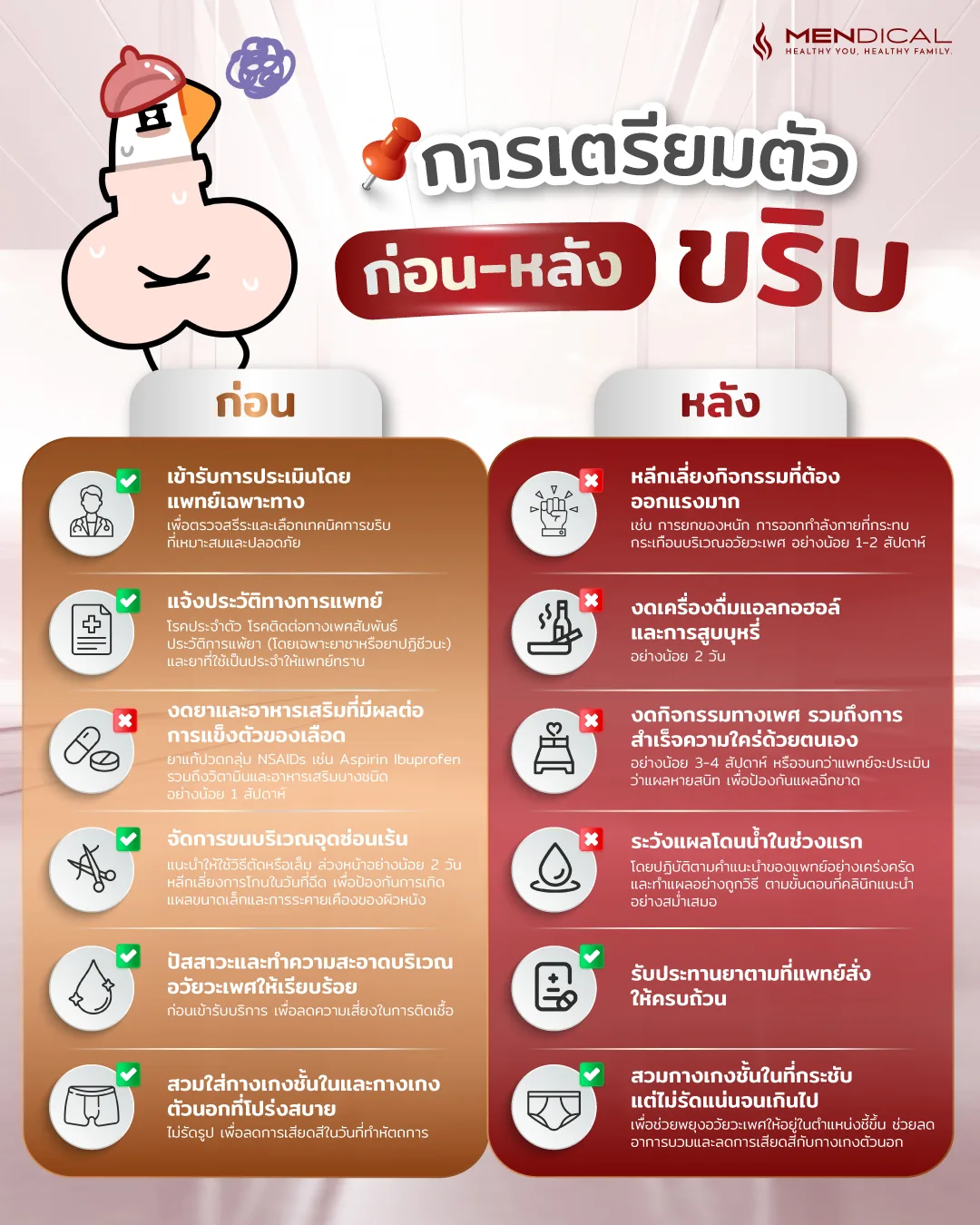
Before circumcision:Avoid blood-thinning medications as instructed by your doctor. Get enough rest, maintain personal hygiene, and inform about any chronic conditions or drug allergies.
Post-circumcision:Keep the wound dry and clean, avoid heavy activities and sexual intercourse as directed by the doctor, take medication as prescribed, and attend follow-up appointments for wound checks.
Circumcision at MENdical Clinic
At MENdical Clinic, circumcision is performed.by a specialist in urologyIn the standard procedure room, privacy is ensured. The doctor will help select the technique that is suitable for you and will monitor the wound until it heals completely.
Video: What type of penis should be circumcised?

Frequently Asked Questions (FAQ)
Does circumcision hurt?
During the procedure, a local anesthetic will be injected, so you will hardly feel any pain. After the anesthetic wears off, you may experience some tightness or mild pain, which can be managed with the pain medication prescribed by the doctor.
How many days of recovery are needed after circumcision?
Most patients can return to their daily lives almost immediately. The wounds usually heal within 1–2 weeks. It is advisable to refrain from sexual activity and heavy activities for about 4–6 weeks as recommended by the doctor.
Is adult circumcision dangerous?
It is not dangerous if performed by a specialist in a standard medical facility. Circumcision in adults is a safe procedure and does not take long.
Will stitches need to be removed later?
It depends on the technique — whether it's dissolvable sutures or a knotless sleeve, there is no need for suture removal. For some techniques, the sutures will dissolve on their own. The doctor will provide details on wound care based on the chosen technique.
How much does circumcision cost?
The cost depends on the chosen technique and the condition of the foreskin. The clinic will assess and provide a clear price before every procedure. You can inquire or have a preliminary consultation for free via LINE @mendical.